Lindy West vs The Internet

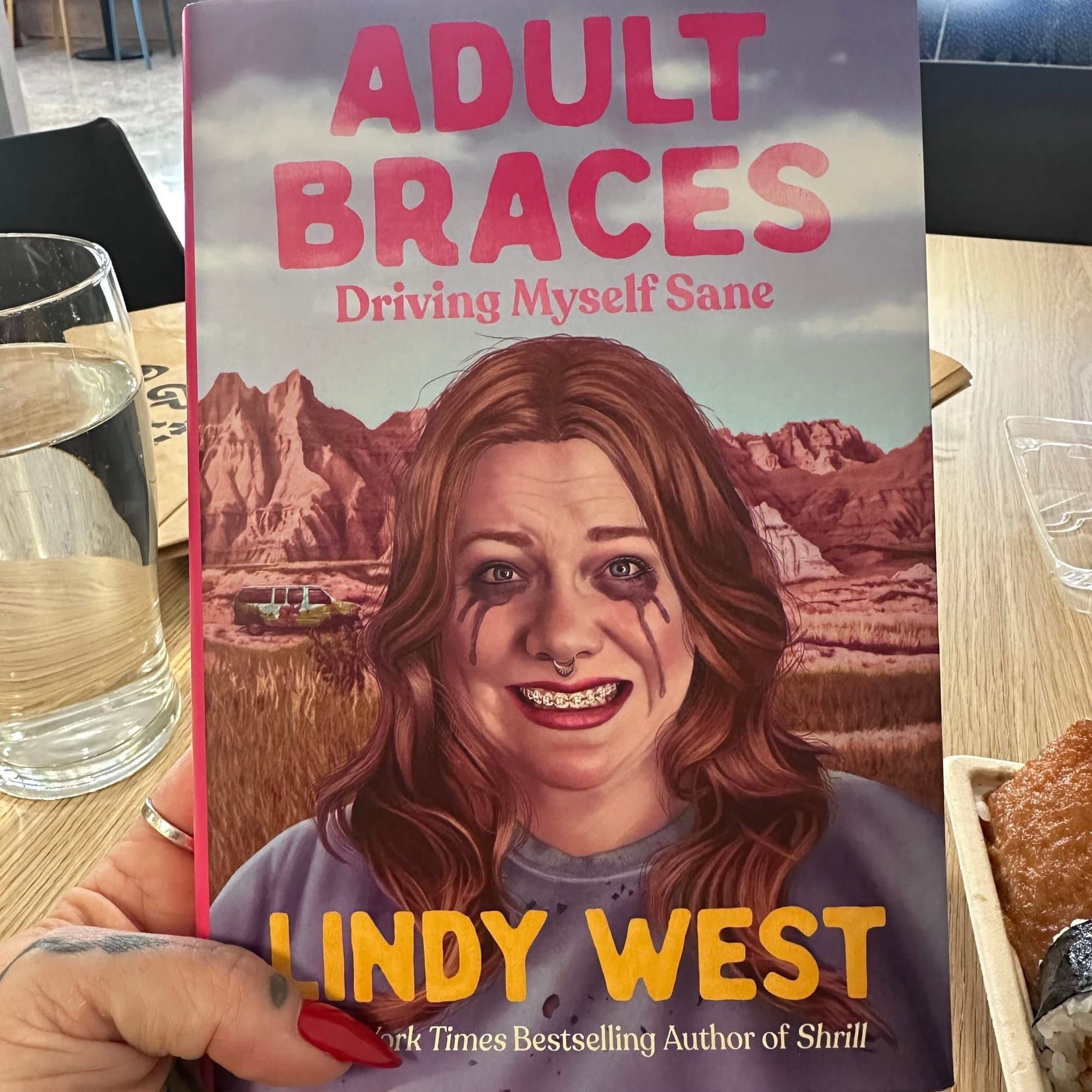
(I wrote most of this in a fugue state after reading this book months ago. Just so you know)
I've been reading Lindy West's writing for a long time. I own a copy of Shrill. I've been reading feminist blogs since they became a thing. I've been reading blogs since they became a thing. I was there, on the internet, through the warm ups to Gamergate and beyond. I have followed Lindy on Instagram for years and I've seen much of the internet content of her throuple with Ahamefule and Roya. I was a fat kid and have been a fat adult of varying sizes for close to 30 years. I had an eating disorder. I have been in an open relationship for 18 years and I am a writer. I say all this because I feel like I need to give context for my thoughts. To set you up with where I'm coming from before I start making my arguments. There are many areas of my life that touch on areas of Lindy's life. Tho, I am not an internet celebrity. I am not from the US. There are many, many differences as well. I got tired of the discourse around Adult Braces and spent seventy human dollars on special ordering a physical copy so I could read it and formulate my own thoughts about what the fuck is going on. Seventy human dollars.
Maybe you too have been bombarded with how Ahamefule is a narcissist, a manipulator or just an asshole. Maybe you have seen posts about Lindy gaslighting herself into doing what Ahamfule wants. No one can really be into fat women! Maybe you've seen posts talking about how it's completely obvious how he is so much more into tiny, perfect Roya. His body language! Etc! For me these posts were like brain rot. They all came off as missing points but I couldn't pin it down without reading the text itself. So I read the book.
First and foremost Lindy is an entertaining writer. Yes, it's really internet coded. Yes, it's a style that's from a particular time. I'm sure there are many people who didn't enjoy it on sight. But I haven't been able to finish a book since I read Our Share of Night in January and I steamed through this in two days, a matter of hours really. Some of that is absolutely because I was very into the subject but undeniably Lindy West can write. She is funny and more vulnerable than I think many of those internet readers deserve. I've been a reader of memoir for a long time and I think memoir as a genre is one of the most difficult but one that has helped me so much more than any other genre. Seeing people confront themselves, their lives and all the complexity and difficulty within contributed to giving me the courage to do the same in my own life. Memoir isn't truth. There's never one story. Humans are galaxies there is so much more about a person than we could ever communicate to each other. But I love that memoirists try. The memoirs I enjoy the most are from queers or fatties or gender weirdoes like myself. I love to see a fuller spectrum of humanity than I was allowed to see as a young person. I love to know I'm not alone. I spent so much time in the 90s feeling alone.
The Slate profile on the book and Lindy has been described as a even-handed and empathetic on Reddit (lol) yet comes off to me as largely one question: why would you write this? It's a fairly chill piece in some ways but I think it really rides a very specific line and I don't think Lindy is entirely wrong in her response
“I feel hurt by this piece. It feels subtly designed to generate exactly the kind of backlash against Ahamefule and, by extension, me,”
The author Scaachi Koul tries to connect themselves to Lindy in that they both write about their lives in a vulnerable fashion. Scaachi wrote a book about leaving her husband. It feels like a bit of a bait and switch to me. "The call is coming from inside the house and it means I'm allowed to say this stuff!" I feel judgement on the fact Lindy has not left Aham several times through the article. The book is so much about Lindy and yet this article makes it so much about the marriage. I do think it misses the point. Maybe that's just because the person is monogamous. Maybe that's just Slate. Maybe that's just what is possible on the internet. We feed the trolls and it generates clicks. For some people their livelihood is connected to the click. It's true for both Lindy and Scaachi. Their sharing and vulnerability has a cost but it also has a price.
Lindy has really felt the consequences of being a fat, feminist woman online. She talks in the book about how it affected her. About how I might say it traumatised her. Receiving repeated death threats we know has a measurable impact on mental health, on life quality, on a bunch of things. Lindy faced up to this for YEARS. This is during her relationship with Ahamefule. Having a fucked up nervous system messes with a person. It makes trust and relationships difficult. More difficult than they already are. This is important context. There's so much important context in the book. Reading about the start of their relationship I could feel that both Lindy and Aham contributed fairly equally to that difficult start to polyamory. They were both assholes for lack of a better word. They were both in denial about different things. They both wanted to stay together and they did probably the best with what they had at the time. They were both pre-therapy. They were young! Lindy's dad had just died! I don't know if you've ever been in any relationships but they don't always go well. Even when you love someone a lot it can still be an absolute shit show. I notice within myself and others this impulse to have a bad guy in a break up or relationship. So often there's not a bad guy there's just two or more, imperfect people fucking things up day to day. I have fucked many things up, relationally. I have tried to control when I should not have. I've taken people at their word because I wanted to, even though I shouldn't have. I have done many of the things that show up in the book. Being fat has been an absolute headfuck for me with relationships and I absolutely made choices because I believed no one could really love fat people, even as I was being loved.
Our insistence on bad vs good or right vs wrong in relationships is I think one of the sadder things of the current time. We have blunt instruments to deal with the writhing complexity of being alive. We have to learn conflict resolution. We have to learn so much. In some interpersonal situations in my life I feel like one party is trying to win, or be safe or right. Sometimes that party is me. It is all a lot of effort and I feel sad Lindy basically peeled back the lid on the level of intense complexity for her in this situation and people are greeting it with an intense desire to be right and for someone to be wrong about a relationship. Maybe this is what I'm doing in writing this! I want to be right! I don't really want to be right. I want there to be more space for us to be fuck ups. Is Lindy always right about everything? No. Is anyone? Why are we suddenly demanding that prominent people in the history of feminist commentary are held to very inhuman standards in their lives and relationships? Focusing on rightness and wrongness in intimate relationships seems like a really terrible way to go about connecting. It seems like if we go with that there should be an invisible tally ticking away in the background noting down failures, especially. That's a horrible way to live a life. It is a horrible way to be in relationship. Perfectionism is also a white supremacist trait. We don't have to go for it. This book is FULL of Lindy's accountability for her own actions. That is what I care about.
In my own life, my own open relationships (you will not catch me calling it polyamory thankyouverymuch) I reject the cop, the tally, the right and wrong. The questions for me are do I want to be here doing this with you? And if so, how are we going to sustain this in a way that works for both of us? I might have hurt someone's feelings but if I quibble about it all I'm doing is extending that hurt, digging a deeper trench. I have learned to take my people's expressions to heart. To apologise and to work on repair. That's not to say I always get it right (hah!) but I try to do better. The internet got really obsessed with intent vs impact for like call out culture but in my view it should also be applied to interpersonal relationships. I didn't intend to hurt your feelings. But I did. I am sorry. I will work to not do that again. What's next? And I guess this is where it also comes down to a sort of power analysis for me.
There are so many factors related to power that are at play here. This week (ok months ago now) I learned about the 62 million page impressions to a rape how to academy. (Unsurprisingly tho this actual week has been full of more rapists so maybe it doesn't matter when that original point was. We live in rape culture.) There are many reasons to hate the class of people known as men. I have come in and out of this through my life depending on whether I have recently been sexually assaulted or not. But men as a class are not individual men and I think the context is very different interpersonally than when talking about the privilege afforded to the group. In any case, Ahamefule is non-binary. Many people still see them (they are a he/they at the time of writing) as a man. I think much of the analysis is heterosexual relationship coded and I think that's where it goes a little wrong. If we start to compare various privileges or access to power they both have complex interactions with it. Lindy is white. Ahamefule is a Nigerian American. Lindy is fat. Aham is tall and thin. Lindy is likely cisgender (the book it wobbles this) and Aham is not. Lindy is probably neurodivergent. I have no knowledge of Aham's neurotypicality. Power analysis is important. Power is a key component of abuse in many situations. I'm calling it power but I guess this is more like intersectionality or structural inequity. Or everything.
These two come out fairly equally balanced with what I have available to me. I'm not trying to make this some sort of card game of who is the most oppressed but there is a difference between abuse and just general fuckery. Abuse generally requires power and specific abusive behaviour. It can look like control of finances, emotional abuse, restricting who a person can see as well as physical violence. Often in heterosexual relationships the set up is that The Man has more power than The Woman. It leads to some simple math, in part because there are some extremely real and valid differences in the way women and men are perceived and treated in dominant culture. It can get murkier when it comes to queer relationships simply because power isn't as easy to locate. When people say Lindy was gaslighting herself or Ahamefule manipulated her into accepting polyamory, these words to me are words for use when talking about abuse or about interpersonal violence. This is the tenor the internet is giving. It's not my job to decide if this is or isn't abuse for Lindy but it's clear to me that Lindy doesn't think it's abuse. And I don't think it's particularly chill of the internet to decide that on her behalf. It's a very common experience as a traumatised person to relay a cute anecdote and have someone look at you with horror. So clearly there are moments when having your experience reflected back to you is useful. I didn't recognise some of the things I experienced were abuse until many, many years later. But in this situation the internet yelling to DUMP HIM (plus a whole lot more awful stuff), probably feels good in the moment but is a kind of weird recreation of the reduction of agency they're accusing Ahamefule of enacting. Lindy West is a grown person, writing about her experience of her life. I think we can believe her. (Additionally, if you've ever worked with people experiencing domestic violence the work is standing beside them until together you figure a way out. It's never just yelling dump him over and over.)
It is way too simplistic to say Ahamefule manipulated Lindy into polyamory. It denies her agency. It denies her choices. It gives him more power than he has, actually. Did he behave poorly, no doubt. Did they get through it. Seems like it! They did quite a lot of couples therapy. They are in a completely different place now where they all seem pretty happy. Lindy writes a fairly blistering paragraph about her own people pleasing that really owns her part of some of that early failure to connect.
It's the same driving impulse that makes me a "people pleaser," a hideous misnomer for a hideous behavior. "People pleasing" is never about pleasing people—it's about the pleaser avoiding dis-comfort, confrontation, accountability. It's a manipulation, a rot that threatens all my relationships, not because it makes me "too nice" and vulnerable to exploitation, but because it makes me a liar who isn't willing to do the hard work of love. It's actually cruel to not want to know how people feel.
I think we can make a distinction between little m manipulation and big M Manipulation. I'm not prepared to say that manipulation only happens in contexts of abuse but I do think some people are too quick to call something Manipulation when it's much more likely manipulation. We're always manipulating each other. Maybe that's too cynical a point. We're always trying to influence each other. Some people are assholes. But they aren't abusers. I feel like this is an important distinction. Some people aren't even assholes they're just doing their best with what they've got. Most of us are not raised in families with good rupture and repair processes. The dominant culture doesn't really value those kinds of things because interconnectedness and the power of community works directly against white supremacist patriarchal culture. If we are isolated it's easier to manipulate us. And it's quite easy to isolate us. A way we can work against this culture is to try to connect, repair and continue. I personally, have spent most of the last 26 years at least, attempting to connect with others in healthier and better ways. I still have a lot to learn. There are many caveats to be made here because it's not always right to stay or continue trying. But it's something I prioritise and try for first these days rather than running to my old instincts.
Reading books like Adult Braces is one of the ways I see other people struggling with the same things I've struggled with. There is power in sharing stories. Maybe being on the receiving end of these black and white blame reactions is just part of being visible and outside the norm in this world we have now. But goddam I wish that wasn't true. Another book came out recently where people were posting reckons without having read it and it makes me sad we live in a time where we have built a culture of shouting opinions from the rooftop without doing the bare minimum due diligence of engaging the text. I would probably say that though. My education was in literature criticism. Even though it was so long ago I feel I don't recall much of it I do remember in order to formulate what you think you do actually have to read the thing.
So all of that is to say, what a surprise, the internet was full of people who didn't read or who didn't care to engage with the text. Let me know if you're local and want to borrow my copy. I need to get my money's worth, at least.